
What to do to become a Templar?
See the dedicated section Becoming a Templar.
Are women allowed too?
Yes.
Women are admitted with particular responsibilities in the areas of assistance, charity and especially in works of piety for the benefit of children, the elderly and the sick. Our Sisters serve, in every respect, as Dames within our community.
Can non-Catholics join too?
We profess ourselves Roman Catholic Apostolic Christians and stand alongside the Holy Roman Church. We recognize the Pope as our supreme guide and therefore accept only Catholic faithful and those who wish to become so. It is possible to begin the novitiate even when coming from other Christian churches, with a view to full communion.
Are you a clique that exercises occult power?
Absolutely not!
Unfortunately, the name “Templar” has been used in recent history for ignoble purposes or for historically careless novels. For this reason, out of a need for transparency and public witness of the Christian faith, all the actions we perform are public, carried out in the light of day and verifiable with the Cardinals, Bishops, Abbots and priests who know us and support our work. Everything is documented by the many testimonies and images online on our official website, on our Facebook page and on our official social channels.
How much does it cost to be a Templar?
The Templar way is a path where ranks (internal) and assignments (operational) are not obtained through money. The only money required is the membership fee of €60 per year to support running costs; after that, everyone provides for their own clothing and travel expenses for services.
Are you present in my city?
On this page you can see the active Commanderies and Lances (mansio supporting the Commanderies and possible future Commanderies). We are present almost everywhere in the world and, if we are not yet in your city, you can contact us to consider opening a new seat, bearing in mind that this is an undertaking that requires commitment, dedication and constant participation.
Do the Church and the State recognize you?
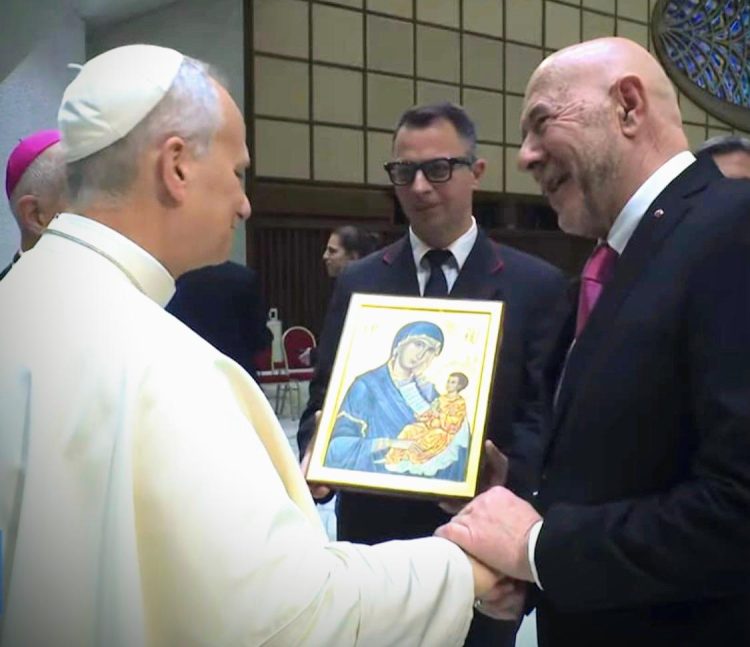
First of all, we are unilaterally and unquestionably on the side of the Church of Rome and of the Holy Father; we state that the Church welcomes us lovingly and allows us to operate freely in numerous dioceses, as an Association.
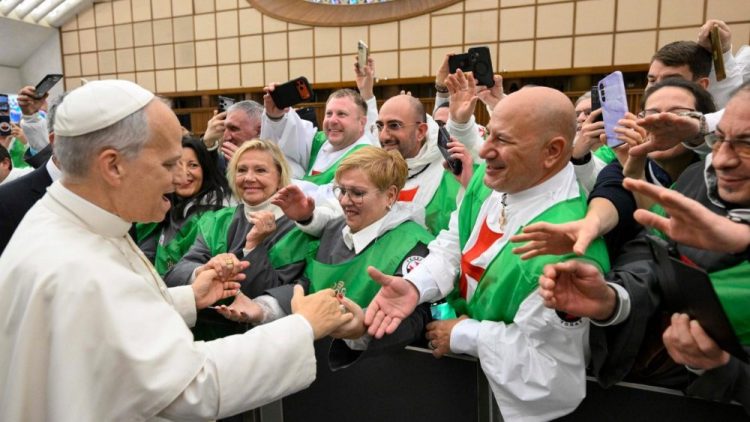
We officially collaborate with the high Vatican institutions: we were called by the Dicastery led by H.E. Mons. Rino Fisichella (Pro-Prefect of the Dicastery for Evangelization) for the service of security and accompaniment of pilgrims during the Jubilee of 2016 and, again, to guard three Papal Basilicas for the Jubilee of 2025.
From the State’s point of view, we are a Social Promotion Association (APS) belonging to the Third Sector. In this capacity, we have signed official agreements with the Ministry of Justice to host people called to perform community service work. While operating under this legal form, we look with complete openness to any further developments of our status in the furrow of the millennial tradition, in obedience to the Holy See.
Our presence in the Dioceses is:
an expression of the right of the faithful to gather in association, a right moreover recognized by the Second Vatican Council (cf. AA 19d, PO 9c) and by the Code of Canon Law (cf. can. 215). Where the aims pursued are those of charity and piety, or the increase of the Christian vocation in the world, the faithful have the right to gather with other faithful and to act in the sphere of autonomy.
(a Bishop, 2016)

Are you Freemasons?
No.
We follow the Catholic Christian way, which is in antithesis to Freemasonry (which entails immediate excommunication, by virtue of the repeated pronouncements first of the Holy Office and then of the Congregation for the Doctrine of the Faith).
Are you excommunicated?
No.
We are an Association established in accordance with canons 215, 216 and 299 of the Code of Canon Law. Our community, inspired by the ancient order of the Pauperes Commilitones Christi Templique Salomonici, does not claim a direct administrative descent from it (being a lay and not a monastic community) and operates in complete transparency. Therefore there is no direct link with the ancient suppressed Order.
Moreover, the Chinon Parchment, found in the Vatican Secret Archive in 2001 by Dr. Barbara Frale and containing the records of the trial, showed that in 1308 Pope Clement V granted sacramental absolution to the Grand Master Jacques de Molay and the Templar Knights, lifting every excommunication and censure and readmitting them to the communion of the Catholic Church.
And the bull Vox in excelso, which suppresses the Order?
The Vox in excelso is today at the centre of an open historical and legal debate. No documentation of the original exists: only copies and transcriptions survive, and they do not coincide with one another (about two hundred differences, 33 of them in the legal part). According to the study presented in Rome on 13 October 2026 by Daniele Mattiangeli (Universität Salzburg), the text is in fact a historical forgery. The act that had concrete effects, the transfer of the assets to the Hospitallers, was the bull Ad providam. As an association we do not ask for the reconstitution of the Order or the return of assets, but for the moral and historical recognition of the honour of the ancient Templars, absolved at Chinon. Read the report on the conference and the in-depth article on the bull.
Are you an Association or an Order?
We are an association structured internally like an Order of Chivalry, that is, following a discipline, a hierarchy and a spirituality inspired by the ancient orders of medieval Christian chivalry.
If you are an Order, what kind of Order are you?
We are not a public order of chivalry. We are an association organized internally like a traditional Christian Order of Chivalry, inspired by the ancient Order of the Pauperes Commilitones Christi Templique Salomonis as regards the vocation of defending the holy places, pilgrims, the weak and the oppressed, in full communion with the Catholic Church and the Pontiff.
We firmly believe that even in our century the way of original chivalry is necessary, based on personal sacrifice for the common good, drawing inspiration from the First Knight, the White Knight Jesus Christ, who first showed us the way of personal sacrifice and taught us to perform the unbloody sacrifice through the Eucharist.
Do you feel you are heirs of the ancient Templar Order suppressed in 1312?
In the sense of the values pursued, yes.
We are an association that lives an authentic chivalric vocation and we draw inspiration from the values of the ancient Order in the guardianship of holy places, of the weak and of pilgrims, always in obedience to the Catholic Church and the Supreme Pontiff.
In what sense do you feel you are heirs?
We feel we are heirs in deeds and works: precisely as regards the intent to guard the holy places, ever more often abandoned and desecrated, and to defend the weak and pilgrims.
On what basis do you confer ranks and who, in turn, conferred them on you?
The Association does not confer ranks publicly recognized by any State, by the Catholic Church or by any other fons honorum. The ranks conferred have a value and use exclusively internal to the Association and reflect the structure of the ancient monastic-chivalric Order. Ranks are conferred intuitu personae after a period of preparation of at least one year and a 3-day course of fasting, prayer and meditation, followed by the “vigil of arms”: a whole night spent in prayer, standing, alone in an ancient church.
If you consider yourselves Catholics in obedience to the Church and the Supreme Pontiff, how do you explain your existence if in the papal bull “Vox in excelso” the Pope declares: “By irreformable and perpetual decree, we suppress the aforesaid order and its state, rule, habit and name, and subject it to perpetual prohibition, strictly forbidding anyone to enter the said order or to receive and wear its habit and present themselves as a Templar. Should anyone act otherwise, let them incur ipso facto the sentence of excommunication”?
First of all, we reiterate the historical difficulties of the aforementioned Bull. Moreover, our Association is inspired by the ancient Order of the Pauperes Commilitones Christi Templique Salomonis, but does not claim to represent or revive it directly, since it was suppressed in 1312. The ancient Order was composed of monk-soldiers; our Association, by contrast, is made up mostly of lay people active in various professional fields.
The Association draws inspiration from it for its works and spirituality, as well as for the adjective “Templar”, linked to the guardianship of the sacred temples of Christianity. We specify that the name “Templari Cattolici d’Italia”, like “Templari Oggi”, is essential to distinguish us from the countless esoteric or Masonic realities that exist solely for purely material and economic ends.
Why do you use the name “Templars” and the symbolism connected with it, if you recognize the historical authority of the Pope?
The adjective “Templar”, from the Latin templaris (derived from templum, “temple”), means “of the temple, of the temples” (Vocabolario della lingua italiana Treccani) and is a term linked to the guardianship of places of worship.
The Association, in keeping with its vocation to guard and defend the temples of Christ, uses this term in conjunction with the noun “Catholics” and, in obedience to the papal decision, does not use the ancient name of Pauperes Commilitones Christi Templique Salomonis.
What is your view of the Grand Mastership of Philippe of Orléans?
Philippe of Orléans, regent of the throne of France from 1715 to 1723, established a new lay Templar Order in 1705, without any recognition from the Catholic Church. On that date neo-Templarism was officially born, made up of Catholic realities and of realities of other kinds. The latter have besmirched the name “Templar”, causing immense harm to the Church of Rome. One of the Association’s aims is to help the Church bring the name “Templar” definitively and officially back into Her loving arms and snatch it from the usurpers.
Even if there had been an effective continuation of the Order after the suppression of 1312, how can this be reconciled with the papal Bull that forbids any act to that effect?
Any kind of direct continuation of the same ancient Order of the Pauperes Commilitones Christi Templique Salomonis is to be considered illegitimate and invalid on the canonical level, by virtue of the aforementioned bull and of the authority recognized to the Pope. Ours is in fact a Social Promotion Association (APS) inspired by the same charitable values and by the same vocation of guardianship.
Who had more authority? Any remaining members of the Order or the Pope?
The Pope, being the supreme authority of the Church and, as such, of the Order itself.
What is your view of the Italian separation of 1815 and 1867 from the rest of the Order of the Temple led by Fabré-Palaprat and its later branches?
The separation was sacrosanct, given the explicitly Masonic and Gnostic positions pursued by the new leader Fabré-Palaprat and his descendants. The Italian branch, wishing to keep a path alongside the Catholic Church, was forced to take such measures of total distancing.
What is your position on the succession of Gastone Ventura to Alessandro Vettori?
Gastone Ventura led the Italian Temple to Masonic positions which our Association does not pursue. Alessandro Vettori, on the other hand, was purely Catholic and led an Order still aligned with the Church of Rome, so he pursued ideals similar to those of our Association. Alessandro Vettori is the last recognized regent of the Order reborn in France and remaining (only in Italy) on Catholic positions. After the death of Alessandro Vettori in 1945, in fact, that experience also came to an end. We do not collect any Masonic inheritance and our public actions are a constant testimony to this.
Why do you give yourselves religious titles, symbols and denominations (such as “novice” or “friar”) if you are lay people?
Titles of this kind are for exclusively internal use within the Association, given the inspiration drawn from the structure and discipline of the ancient monastic-chivalric Order.
What value do you give to the habit and the sword during your ceremonies?
The habit is inspired by that of the ancient Order. The white mantle of humble make that we wear indicates the purity to which we aspire, and the red cross pattée represents the sacrifice of blood that Christ made for humanity and a clear public witness of faith. The sword represents the cross that every templar bears in their life and the twofold symbolic battle against the enemies of the Faith of Christ and against one’s own personal weaknesses.
What value do you give to your motto: “Non nobis, Domine, non nobis, sed nomini Tuo da Gloriam”?
The motto reminds every member of the importance of performing selfless actions, not for personal gain or vainglory, but to bring the Kingdom of God ever more to the Earth and to fulfil His will.
Do you sell items, gadgets or merchandise online?
No, our Association does not sell objects, gadgets, clothing or titles online. It is a conscious and rigorous choice to preserve the complete gratuitousness of the service and to distinguish ourselves clearly from any commercial or profit-driven dynamic.
As a Social Promotion Association (APS) registered in the RUNTS (Single National Register of the Third Sector), anyone who wishes to support our free activities of charity, security and guardianship of churches can do so by allocating the 5×1000 or through a free donation. Please refer to the contact section.
Where is your representative office?
Our representative office is located at Via di Porta Angelica 63, 00193 Rome, right next to the Vatican, inside a building owned by the Vatican.
As it is an institutional seat and not a building freely open to the public, visits are not permitted.
What are the actual costs of clothing and retreats?
In keeping with our promise of transparency and gratuitousness of service, the only annual membership contribution is €60.
As for clothing and personal logistics, each member covers only the direct costs of producing their own symbols and travel expenses:
• Official mantle: has an indicative cost of about €70-80 (varying from year to year according to the suppliers’ tailoring costs).
• Insignia: those who continue on the path until they become Miles purchase, at the appropriate time and exclusively through official channels, the tunic and belt (for a total cost of about €70-80), while Armiger acquire the neck cross and the mantle cross (for a similar cost).
• Spiritual retreats and pilgrimages: our retreats are deliberately held according to a Spartan discipline of humility and brotherhood, usually staying in simple facilities with cots and sleeping bags. This keeps the cost of logistics and food to just a few tens of euros per day, and they usually last 2 days. Of course, suitable accommodation and exceptions are provided for the elderly, the sick or brothers and sisters with specific needs.
What is your stance on the pronouncements of the Vatican Secretariat of State on unrecognized Orders of Chivalry?
We fully share and support the clarity and vigilance of the Vatican Secretariat of State. These periodic notes are essential to warn the faithful against so-called private “orders of chivalry” that award false noble titles or claim phantom pontifical patents without any authority.
Our reality is entirely different and transparent: we do not proclaim ourselves a pontifical order or a State fons honorum, nor do we award public noble titles.
Our concrete loyalty to the Church and our worth are attested by the actual service we officially perform at the request of ecclesiastical institutions, such as the assignment entrusted to us by the Vatican Dicastery led by H.E. Mons. Rino Fisichella for the guardianship of the Papal Basilicas during the Jubilees of 2016 and 2025. We believe that in this historical moment fraternal collaboration and active witness among the various Catholic realities is a precious and fruitful good for the whole of Christendom.
Why are your clothing and insignia free of gold, medals or decorations?
Sobriety and simplicity are identifying traits of our way of life and of our witness of faith.
We deliberately distance ourselves from every form of ostentation, from the use of gilded trinkets, medal collections or decorative frills that often characterize contexts of vainglory or reenactment. Our clothing is inspired by the severe austerity of the ancient Order: a simple robe, very few symbols and a single red cross pattée on the white mantle, a clear and unmistakable sign of Christ’s sacrifice.
We believe that authentic chivalric vocation is not measured by the richness of accessories or by the titles displayed on the chest, but by the humility of service to the community, by personal sacrifice and by the truth of one’s concrete actions.
Do you feel the call to the Templar Way?
Our path requires discipline, a spirit of service and active witness of faith. If you wish to put your time at the disposal of the guardianship of holy places and service to the community, find out how to take your first steps.


